Concrete leveling in Corona CA: lifting instead of replacing
When one panel of a walk or driveway drops an inch below its neighbors, the concrete itself is usually fine; the soil under it isn't. Leveling fills the void underneath and lifts the slab back up, which leaves no new concrete to color-match and nothing to haul away. It sits with the repair work on the concrete contractor in Corona CA page.
- Walk and sidewalk panels that have dropped and become trip edges
- Driveway sections that sank at the garage or the street
- Patio slabs that tilt toward the house
- Pool deck sections that settled away from the coping
- Steps and landings that pulled away from the house
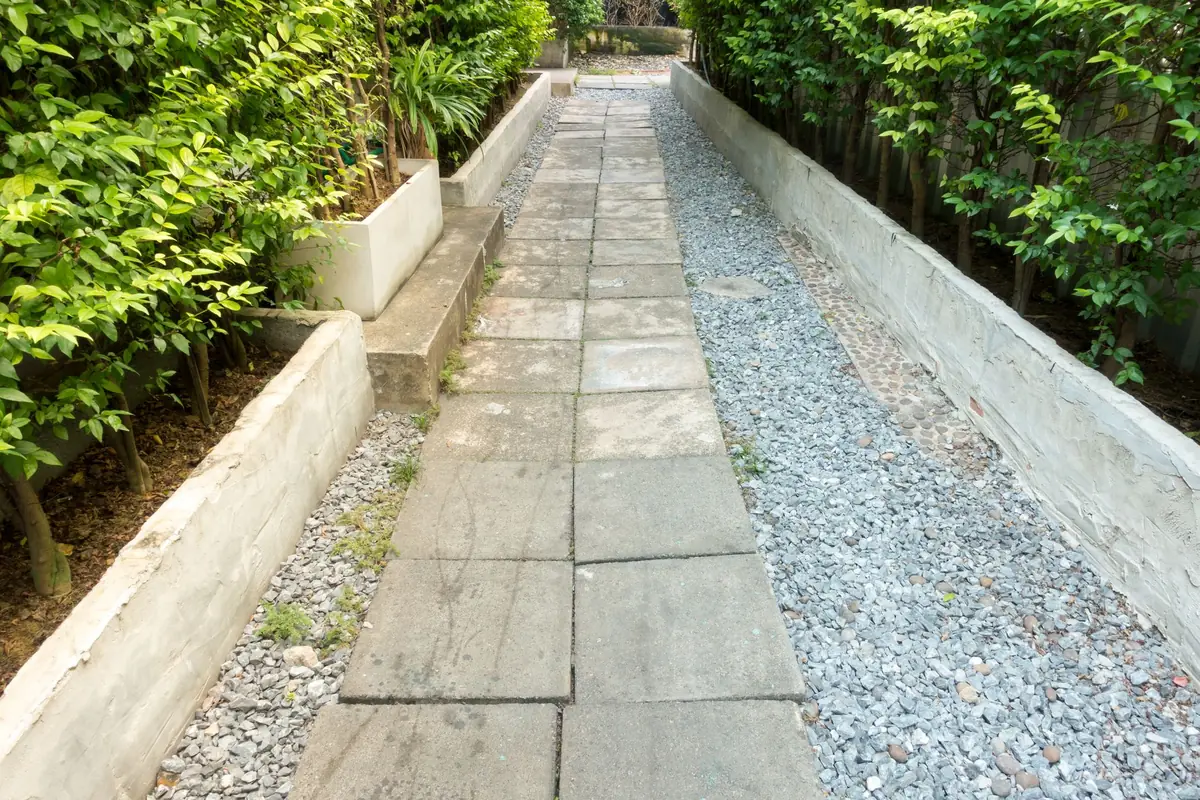
Leveling methods and what they cost
Every method drills through the slab and pumps something underneath. The filler sets the price and suits different ground.
| Method | Price | Source |
|---|---|---|
| Sandjacking (sand slurry) | $3 to $7 per sq ft | Fixr |
| Mudjacking (cement and sand grout) | $3 to $6 per sq ft | HomeGuide, 2026 |
| Slab jacking, all fillers | $3 to $17 per sq ft | Fixr |
| Foam (polyurethane) lifting | $5 to $25 per sq ft | HomeGuide, 2026; Fixr gives $20 to $25 |
| Self-leveling compound (shallow dips, not lifting) | $1.80 to $5 per sq ft | Fixr |
| Driveway, about 600 sq ft | $3,000 to $15,000 | Fixr |
Fixr concrete leveling cost guide (updated January 31, 2025); HomeGuide pool deck resurfacing guide (2026), leveling section. Your own site sets the final price.
Slurry (mudjacking and sandjacking)
A cement-and-sand grout or a sand slurry pumped through drilled holes. It is the cheaper method, and Fixr rates the traditional grout stronger than foam.
Foam (polyurethane)
An expanding polyurethane pumped through drilled holes. Fixr notes it is light enough to use over unstable fill, where heavy grout would add load, but that it costs the most.
When leveling works, and when it doesn't
- Works: an intact panel that sank or tilted, with the cause found and fixed
- Works: a void under a slab from washed-out fill near a downspout or sprinkler
- Doesn't: a panel broken into pieces, which is cut out and replaced
- Doesn't: a slab pushed up by a root or swelling soil, which leveling can't lower
- Doesn't: settling that keeps going because the water source can't be stopped
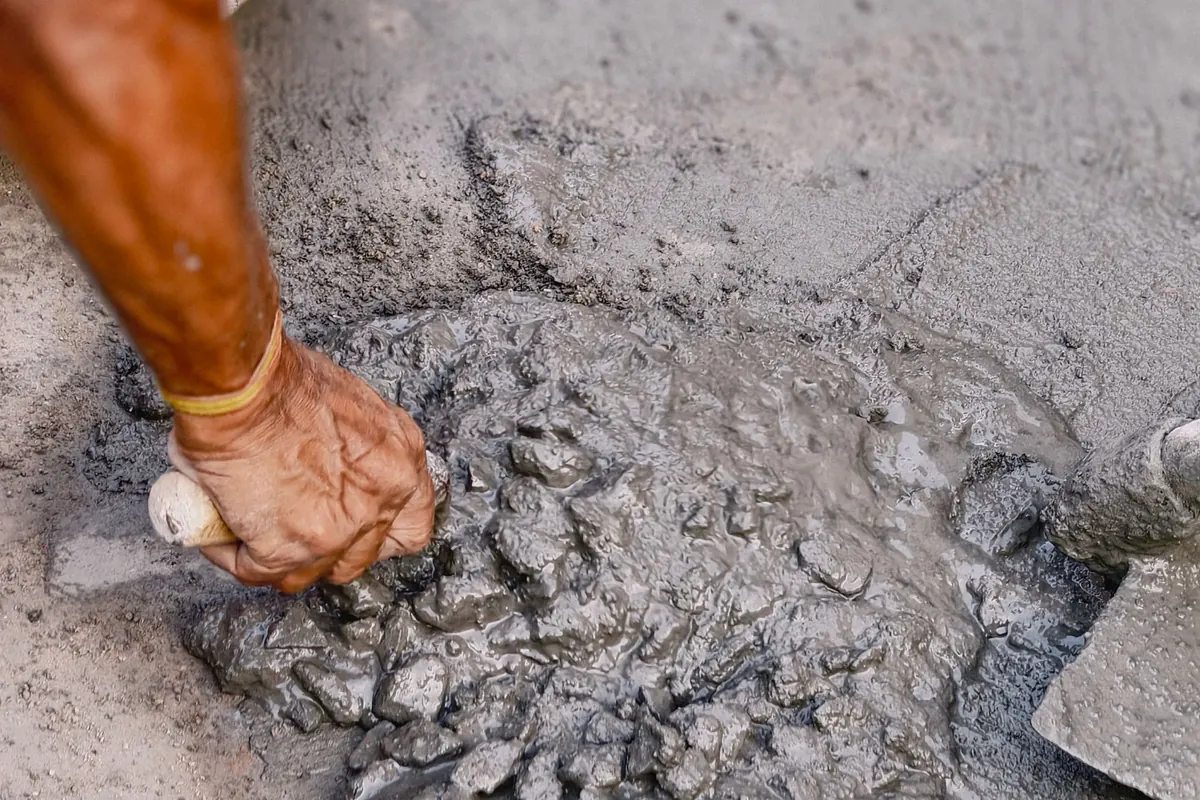
How a sunken slab is leveled
- 1Find out why it sank
A panel drops because the soil or base under it washed out, compacted or was never compacted; a downspout, a leaking line or a planter edge is often the cause, and it gets fixed too or the panel sinks again.
- 2Check that the slab is whole
A panel that is intact and only tilted is a lifting candidate; one that has shattered is replaced.
- 3Drill and inject
Small holes are drilled through the panel and a cement-and-sand slurry or a polyurethane foam is pumped underneath until the slab rises back into line.
- 4Patch and seal
The holes are patched, and the joint between the lifted panel and its neighbors is sealed to keep water out of the void.
Other fixes that may suit better
Cracks without movement are a concrete repair job; a level but worn slab is a resurfacing job; and broken or heaved concrete is removal and replacement. New walks and driveways are on the walkways and steps and driveways pages, and a settled pool deck section is covered under pool deck resurfacing.