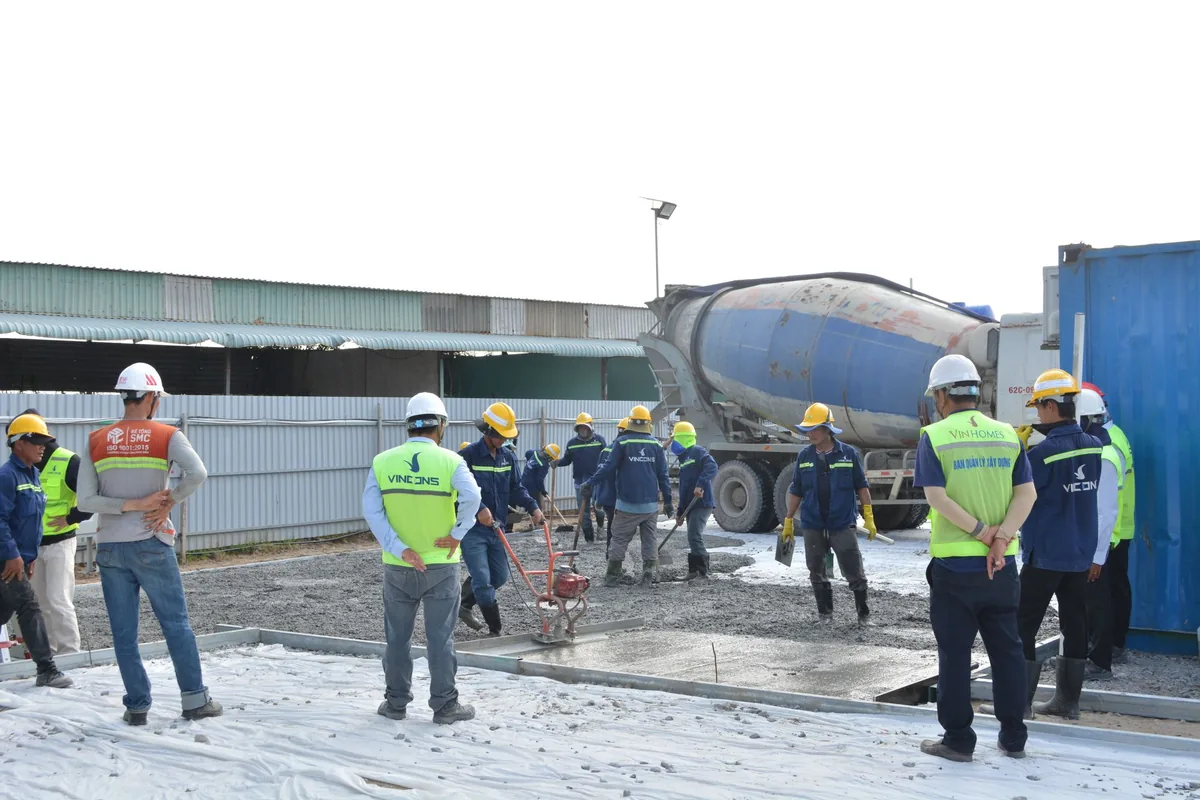
Pouring concrete in hot weather in Corona: how hot it gets
Corona has no NOAA normals station of its own, so the two airports on either side stand in: Riverside Municipal Airport to the northeast and Chino Airport to the northwest. Their 1991-2020 normals agree closely. The pour schedule for a concrete driveway in Corona or a patio follows these numbers.
| Month | Normal high | Days 90°F+ | Days 100°F+ |
|---|---|---|---|
| April | 75.9°F / 77.0°F | 2.7 / 2.5 | 0.2 / 0.2 |
| May | 79.9°F / 81.1°F | 5.5 / 5.1 | 0.5 / 0.5 |
| June | 86.7°F / 87.6°F | 12.1 / 11.3 | 1.6 / 2.0 |
| July | 93.3°F / 93.7°F | 23.8 / 23.2 | 4.9 / 4.7 |
| August | 94.9°F / 96.3°F | 25.2 / 25.1 | 7.6 / 7.8 |
| September | 91.3°F / 92.7°F | 18.9 / 18.8 | 5.6 / 6.4 |
| October | 82.7°F / 84.5°F | 9.0 / 9.2 | 1.2 / 1.6 |
| Year | 79.5°F / 80.8°F | 100.5 / 99.0 | 21.7 / 23.3 |
Scroll the table sideways for all columns.
NOAA NCEI U.S. Climate Normals 1991-2020, stations USW00003171 (Riverside Municipal Airport) and USW00003179 (Chino Airport), monthly and annual normals retrieved November 26, 2026. Station names are geography only. Last reviewed November 2026.
Why heat, wind and dry air matter
Heat changes concrete in three ways, according to the ready-mix industry's guidance: a warmer mix needs more water, it stiffens sooner so finishers have less time, and fast evaporation can crack the top before or just after it sets. Early heat also leaves the slab weaker than one cured near 70°F, and a scorching afternoon followed by a cool night can crack it from the swing alone.
Santa Ana days
The Santa Ana winds take their name from the Santa Ana Canyon, the river canyon Corona sits at the upper end of, and they can drop relative humidity below 10 percent. The NRMCA flags wind over 5 mph and low humidity as the conditions behind plastic shrinkage cracks, and recommends windbreaks, sunshades and fog sprays when they are forecast. Some Santa Ana days are better moved to another date.
Late heat
September averages more 100-degree days than July at both stations, and October still averages about 9 days at 90°F or more, so fall pours get the same care as summer ones.
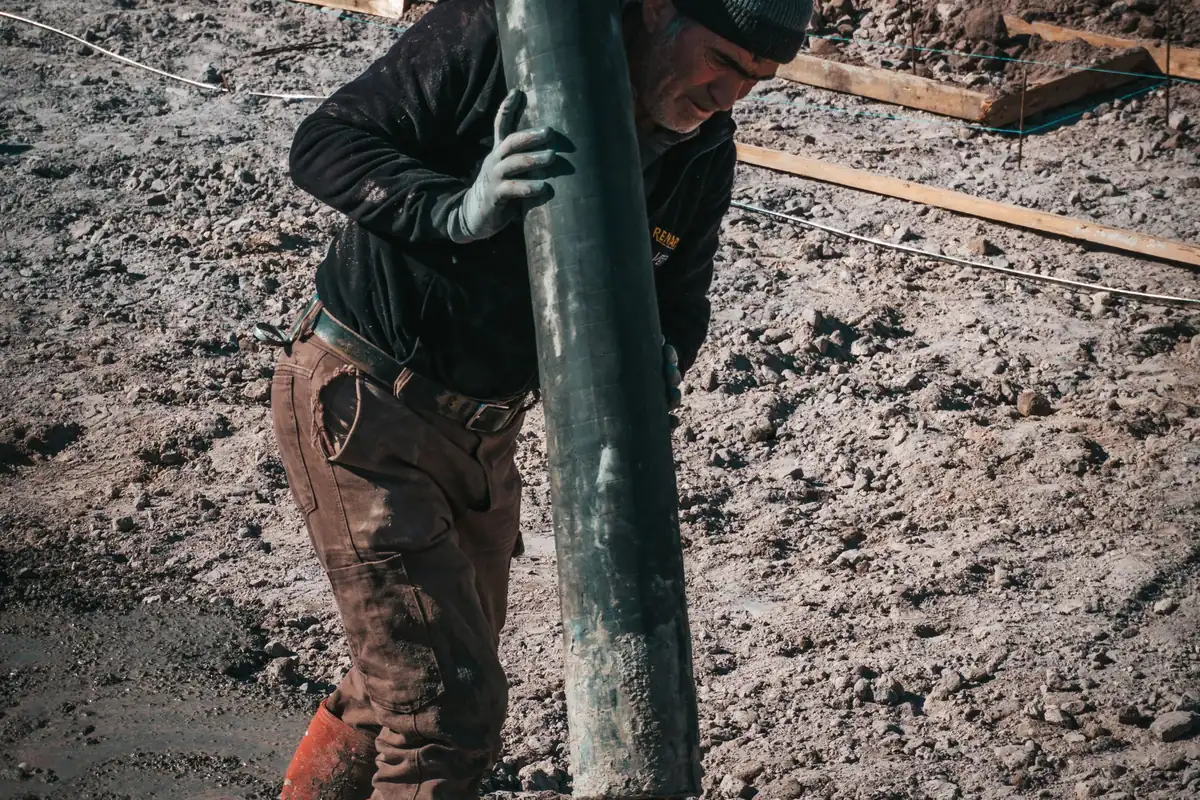
How a hot-weather pour is planned
- Start at first light and finish before the afternoon peak
- Order the mix for the weather; set-retarding or water-reducing admixtures where local practice uses them
- Have the crew, forms and tools ready so trucks discharge the moment they arrive
- Wet down the ground, forms and steel first, but leave no puddles (NRMCA)
- No water added to a load older than 90 minutes, and none sprayed on the face to ease finishing
- Start curing immediately: wet curing or a curing compound, for 3 to 7 days
Finishes that need the most care in the heat
Anything with a short working window suffers first. Stamped concrete has to be imprinted before it sets, so big stamped areas are often split up or poured at dawn. Thin overlays and pool deck coatings lose water fast and go on best on mild mornings. A plain broom-finished patio is the most forgiving. The full list of what we pour sits on the concrete contractor in Corona CA page.